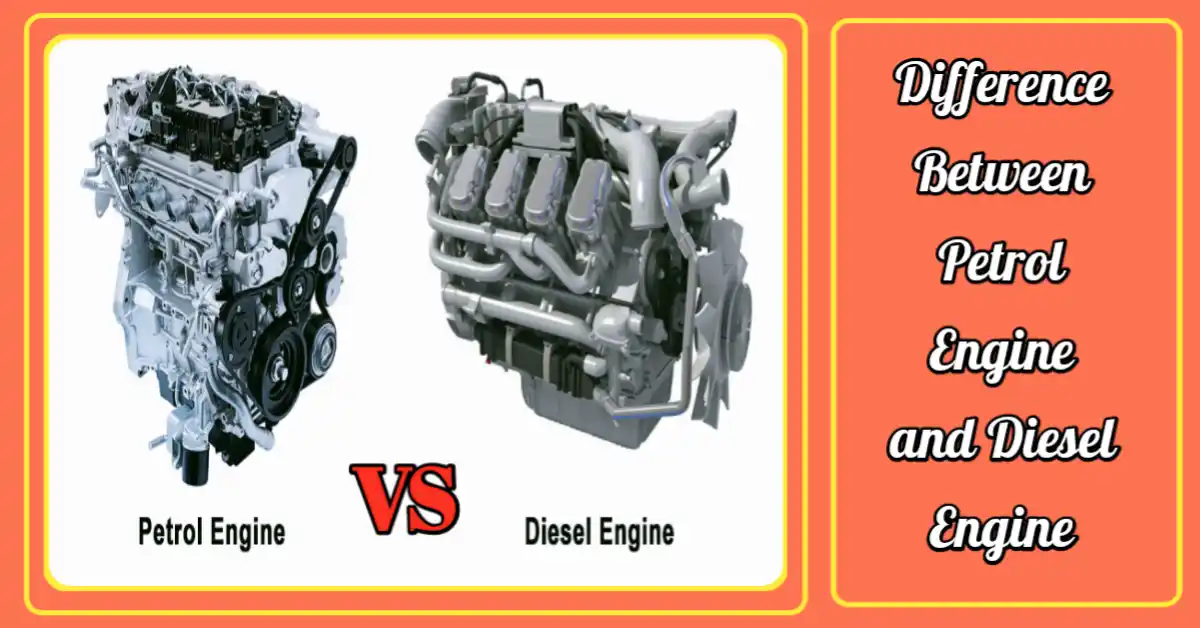
Difference Petrol and diesel Engines
Difference Petrol and diesel engines are both internal combustion engines that convert chemical energy into mechanical energy to power vehicles. Petrol (Gasoline) Engines and Diesel Engines are two major types of internal combustion engines, and they differ in several key aspects, including their operation, efficiency, and applications. Here’s a detailed difference of petrol and diesel engines:
Fuel Injection:
Petrol: Spark-ignition engine. A spark plug provides the ignition source.
Diesel: Compression-ignition engine. The compression of the fuel-air mixture itself causes ignition.
Compression Ratio:
Petrol Engine: Has a lower compression ratio, typically around 8:1 to 12:1. This lower compression is necessary to prevent premature ignition (knocking).
Diesel Engine: Operates at much higher compression ratios, typically around 14:1 to 25:1. The higher compression helps in igniting the fuel by heat generated from the compressed air.
Power and Torque:
Petrol: Generally produce higher power output at higher RPMs.
Diesel: Deliver higher torque at lower RPMs, making them suitable for heavy loads and towing.
Power Output:
Petrol Engine: Generally delivers higher power output and faster acceleration. They are preferred in performance-oriented vehicles due to smoother and quicker operation.
Diesel Engine: Diesel engines produce more torque but generally lower power output. This makes them suitable for heavy-duty vehicles, like trucks and buses, where high torque is more important than speed.
Fuel Efficiency:
Petrol Engine: Petrol engines are generally less fuel-efficient compared to diesel engines. This is because petrol has a lower energy density and the combustion process is less efficient.
Diesel Engine: Diesel engines are more fuel-efficient due to higher compression ratios and greater energy density of diesel fuel. They provide better mileage, especially for long-distance travel.
Emissions:
Diesel: Historically had higher emissions of particulate matter (soot) and nitrogen oxides. Modern diesel engines with emissions control systems have significantly reduced these emissions.
Petrol: Generally produce lower emissions of particulate matter but higher emissions of carbon monoxide.
Applications:
Petrol Engine: Used in lightweight vehicles like cars, motorcycles, and smaller trucks. Ideal for vehicles that prioritize performance and smoother operation.
Diesel Engine: Used in heavy-duty vehicles like trucks, buses, tractors, and industrial machinery. Diesel engines are also common in marine, aviation, and power-generation sectors due to their durability and fuel efficiency.
Fuel Type:
Petrol Engine: Uses petrol (gasoline) as fuel.
Diesel Engine: Uses diesel as fuel.
Cost:
Petrol Engine: Petrol engines are typically less expensive to manufacture and maintain. However, petrol is often more expensive per liter than diesel in many regions.
Diesel Engine: Diesel engines are more expensive due to their robust construction (needed to handle higher pressures). They often cost more to repair but are more durable and can have a longer lifespan.
Maintenance:
Petrol Engine: Requires less frequent maintenance and is less expensive to maintain. Spark plugs need to be replaced periodically.
Diesel Engine: Maintenance costs can be higher due to more expensive components like fuel injectors, turbochargers, and particulate filters. Diesel engines also require more frequent oil changes.
Durability:
Petrol Engine: While petrol engines can last a long time, they generally wear out faster due to lower construction strength.
Diesel Engine: Diesel engines are built to handle higher pressures and are more durable. They tend to last longer, which is why they’re preferred in commercial and heavy-duty applications
Noise and Vibration:
Petrol Engine: Petrol engines run more smoothly and are quieter. They are preferred in passenger cars for a quieter ride.
Diesel Engine: Diesel engines tend to be noisier and produce more vibrations due to the higher compression ratios and the way fuel is combusted.
Ignition Method:
Petrol Engine (Spark Ignition): In petrol engines, the air-fuel mixture is ignited by a spark plug. The air and fuel are mixed in the intake manifold before entering the combustion chamber.
Diesel Engine (Compression Ignition): Diesel engines do not use spark plugs. Instead, they compress the air to a very high pressure and temperature, which causes the diesel fuel to ignite when it is injected into the combustion chamber.
In summary, petrol engines are better suited for applications requiring high power and quick acceleration, while diesel engines excel in tasks demanding high torque and fuel efficiency. The choice between petrol and diesel engines depends on factors such as the intended use of the vehicle, driving conditions, and environmental regulations.
Summary Table Of Difference Petrol and Diesel Engine:
| Feature | Petrol Engine | Diesel Engine |
|---|---|---|
| Fuel Type | Petrol (Gasoline) | Diesel |
| Ignition Method | Spark Ignition | Compression Ignition |
| Fuel Efficiency | Lower | Higher |
| Compression Ratio | 8:1 to 12:1 | 14:1 to 25:1 |
| Power Output | Higher power, lower torque | Lower power, higher torque |
| Cost | Cheaper to produce and maintain | More expensive |
| Durability | Lower | Higher |
| Emissions | Less NOx, more CO and HC | More NOx, particulate matter |
| Noise | Quieter | Noisier |
| Maintenance | Less expensive | More frequent and costly |
| Applications | Passenger cars, bikes | Trucks, buses, industrial uses |
In short, petrol engines are better for performance and lighter vehicles, while diesel engines excel in fuel efficiency, durability, and heavy-duty applications.
Differences between Diesel and Petrol Explained
1. Ignition Process
- Petrol Engines: Use spark ignition
- Fuel is mixed with air, compressed, and ignited by spark plugs
- Diesel Engines: Use compression ignition
- Air is compressed first, then fuel is injected
- Heat from compression ignites the fuel
2. Compression Ratio
- Petrol: Lower (8:1 to 12:1)
- Diesel: Higher (14:1 to 25:1)
- Higher compression ratio leads to better efficiency
3. Efficiency
- Petrol: Generally less efficient
- Diesel: More efficient (20-30% better fuel economy)
- Due to higher compression ratio and energy density
4. Performance Characteristics
- Petrol:
- Higher RPM capability
- Smoother operation
- Quicker acceleration
- Diesel:
- More torque at lower RPM
- Better for towing
- Slower acceleration but sustained pulling power
5. Fuel Differences
- Petrol:
- Lighter and more volatile
- Less energy dense
- Generally cheaper per liter
- Diesel:
- Heavier and less volatile
- More energy dense
- Often more expensive per liter but better mileage
6. Maintenance
- Petrol:
- Generally lower maintenance costs
- More frequent spark plug changes
- Diesel:
- Higher maintenance costs
- More robust engine design
- Additional components (turbochargers, high-pressure fuel pumps)
7. Environmental Impact
- Petrol:
- Higher CO2 emissions
- Lower particulate matter
- Diesel:
- Lower CO2 emissions
- Higher NOx and particulate matter
- Requires additional emission control systems
8. Typical Applications
- Petrol:
- Personal vehicles
- Sports cars
- Motorcycles
- Diesel:
- Heavy vehicles (trucks, buses)
- Construction equipment
- Marine vessels
- Some passenger cars
9. Lifespan
- Petrol: Generally shorter engine life
- Diesel: Typically longer engine life due to robust construction
10. Cost Considerations
- Petrol:
- Lower initial vehicle cost
- Lower maintenance costs
- Diesel:
- Higher initial vehicle cost
- Potential fuel savings over time
- Higher maintenance costs
Read More: What are the Main Parts of Lathe Machine?

Good
Awesome
Very good